Book behind-the-scenes: How it's evolving with feedback from beta readers
your-code-is-not-the-most-important-thing book-behind-the-scenes
Before I jump into it, I just wanted to thank everyone who has interacted with any part of “High Output Software Engineering” so far. You are the reason this project is still going.
version 0
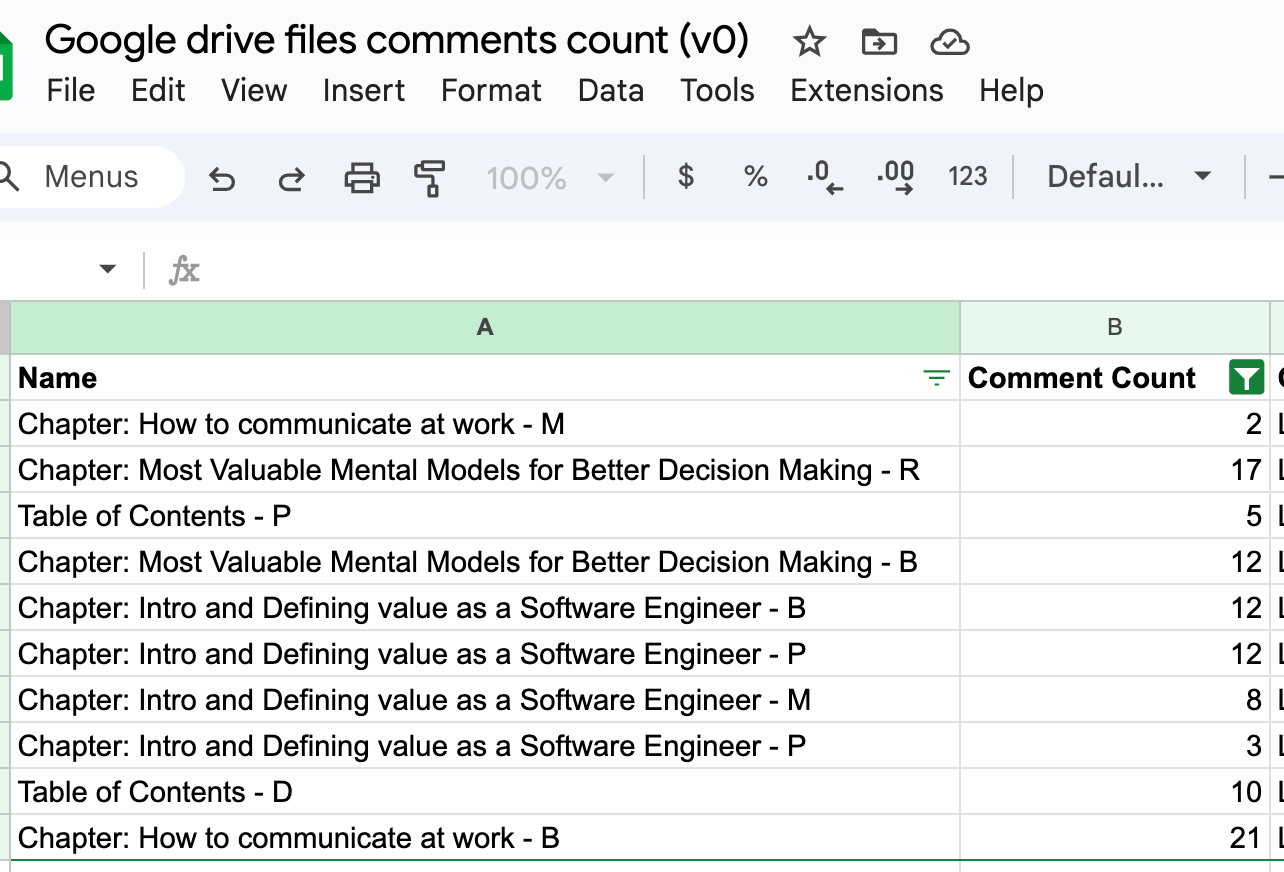
Shared with close friends (most of them part of my public audience: people managing tech product teams and individual contributors):
- first, I shared the table of contents to gather feedback on whether the content might be valuable or interesting, and to crowdsource ideas for things I might have missed
- then, I wrote each section or chapter, collected feedback in Google Docs, and acted on it (repeating this cycle for each main content chapter)
This made me more confident in what I was writing, but also made it clear that I needed to bring more cohesion to what I had so far. At this point, the book felt more like a “100 random things I learned in my career” kind of book (which would be hard to convince people who don’t know me to read).
I then went out to do customer interviews with another group of friends managing in tech and discovered their unanimous main pain point: “engineers don’t understand what really creates value.” With that, I decided to center the book around the idea of value creation.
I had a lot of fun bringing that cohesion to the book: from “100 random things I learned in my career” to “what value creation really means for software engineers.”
version 1
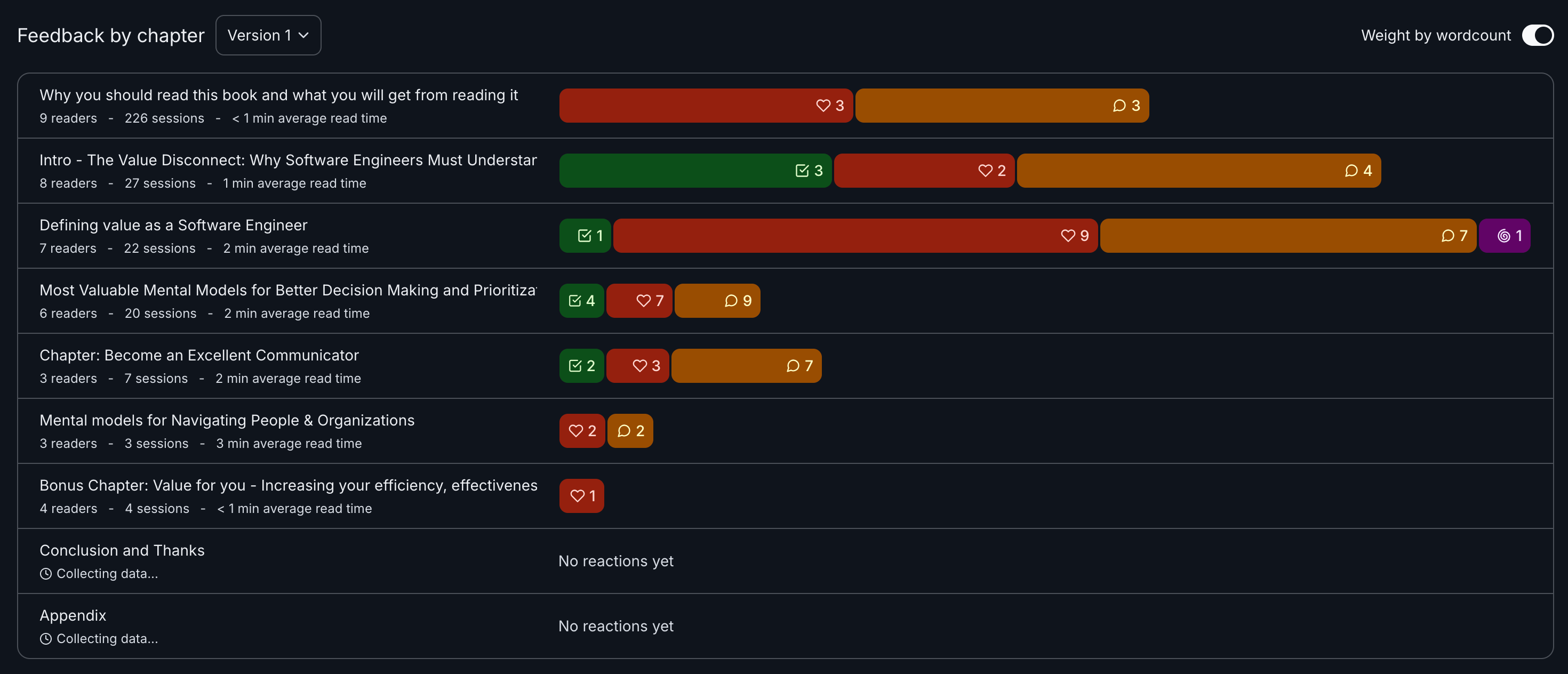
v1 was the first actual book version. Not just chapters in Google Docs, but something with a beginning and an end.
I started using helpthisbook.com to collect feedback, as it gives me some nice dashboards to understand the reader experience. The goal here is to make sure the book has a high value per page.
I acted on feedback from readers.
version 2
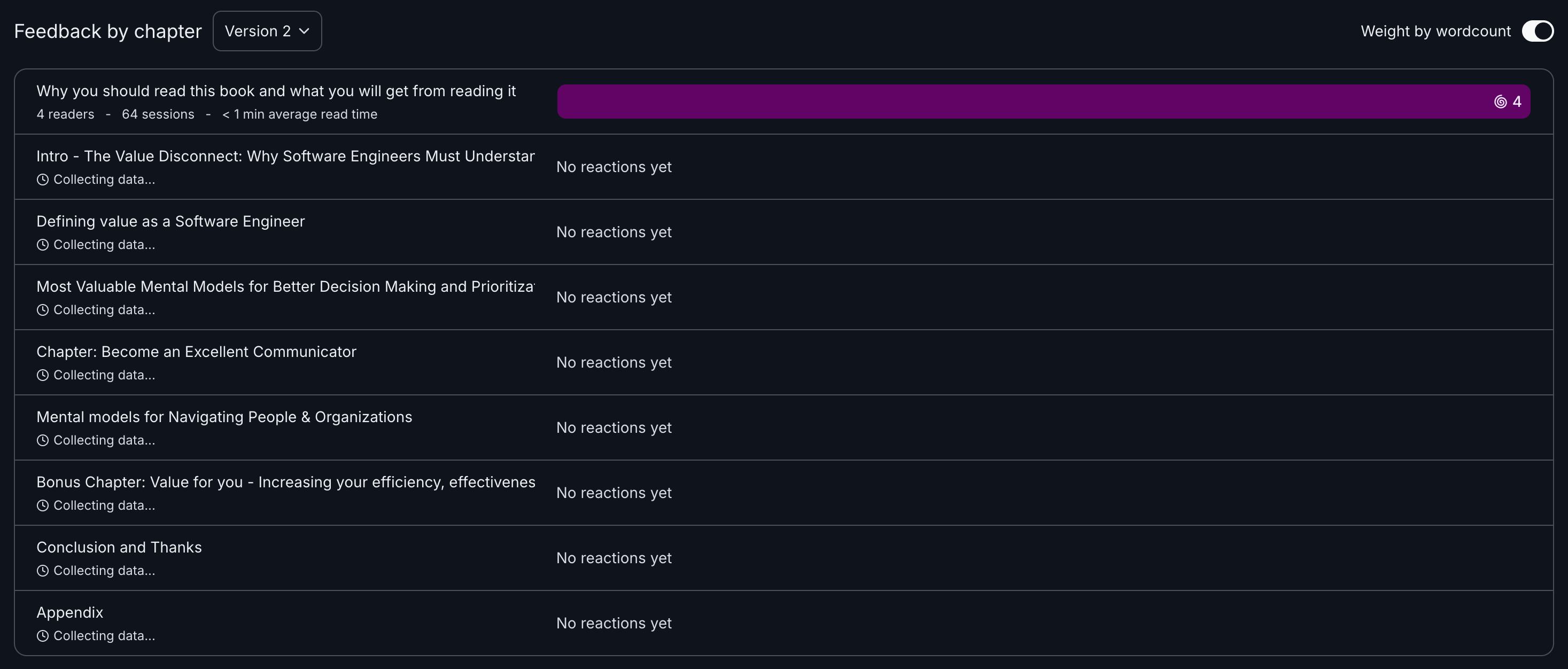
v2 was an interesting one. This reader feedback made me act on something I already kind of knew I had to do. I was saying a lot that, even though it might be valuable to someone out there, it wasn’t part of the book. I was taking too long to get to what mattered.
With that feedback, I rewrote the entire beginning of the book, consolidating the first and second chapters into one, reducing the average reading time to reach the main content (now the second chapter) from 11 minutes to 5 minutes.
Here, I’m also testing a new book title and subtitle:
- from:
- How to think like a Value-Focused software engineer
- battle-tested mental models for optimized decision making, excellent communication and navigating organizations
- How to think like a Value-Focused software engineer
- to:
- Your Code Is Not the Most Important Thing in the World
- What value creation really means + battle-tested mental models for optimized decision making, excellent communication, and navigating organizations
- Your Code Is Not the Most Important Thing in the World
version 3
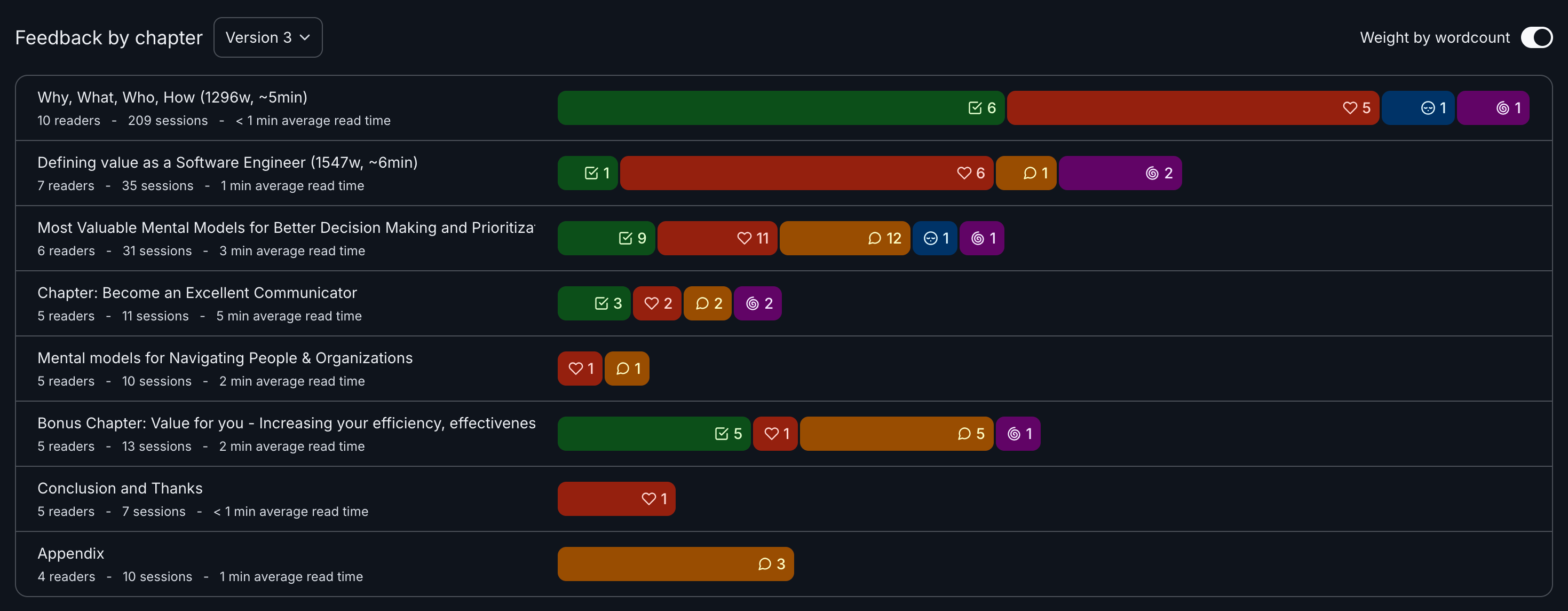
I liked seeing the value per page increase in this version, especially at the beginning. That’s the goal: give readers the MUST-HAVEs first, and leave the NICE-TO-HAVEs for later.
I acted on feedback from readers.
Softly testing a new subtitle that makes the “who is it for” explicit: “What value creation really means for software engineers working on product teams”
version 4
I’m currently gathering feedback for v4. Check back here in a couple of weeks.
---
Check out the landing page for the book here → High Output Software Engineering.
Have you done this before or know something I could do better? I’d love to hear your thoughts. Please ping me at leomaxfyi@gmail.com.
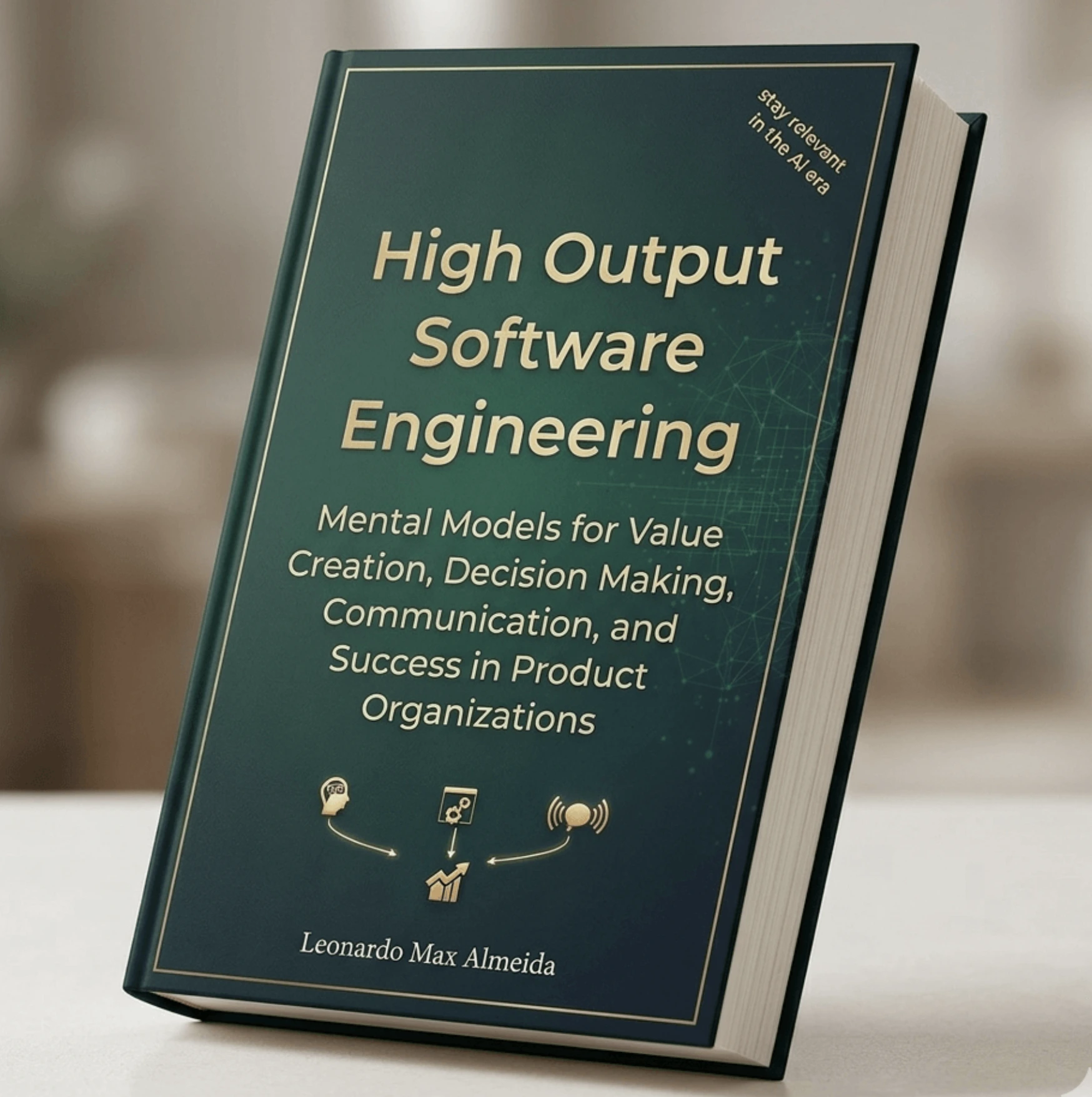
If you're a software engineer working on product teams and found this useful, you might enjoy my book High Output Software Engineering — it's all about understanding value creation, making value-driven trade-offs, communicating with excellence and knowing how to navigate organization dynamics.
Learn more on the book page