Book highlights: “Never Enough” by Andrew Wilkinson
LM → my comments
“Before long, we were buying up technology businesses. Not the kind favored by venture capitalists, the kind of companies some people would perceive as boring,” he said. “We like to joke that we own the dry cleaners and auto dealerships of the internet. Simple, profitable businesses that do something the world needs, purchased at a fair price.
by shooting for the moon and asking for something that was hard to give, I was met with a compromise that was better than I could have hoped for. It’s a strategy I went on to use throughout my career: there’s no harm in asking.
This was how every business worked—creating the demand, building the systems and processes, hiring other people to do the work, then charging enough for whatever it is that you’re selling that you turn a profit.
They did this by understanding the pitfalls of herd psychology and steering clear of the bubbles and manias, from subprime mortgages to crypto, that captured the greedy imaginations of everyone else.
LM: talking about Berkshire Hathaway, a huge influence for Tiny
It had been different in the early days. If we solved one problem, there was a reward at the end of it: a new car, a better night’s sleep, more money saved for a bigger goal. But at this new scale, it felt pointless. More money was just a number in the bank. It didn’t change my day-to-day.
“I was about to sell the business for $22 million and yet I was more miserable than ever,” he told me as I listened intently. “It felt like a huge burden. And I felt this weird itch to do it all over again.” “Never enough,” I thought. He went on: “I started thinking, ‘Now I need to prove that this wasn’t just luck—I need to build a new company, just bigger and better.’ I started dreaming up all these business ideas before realizing that this was just insecurity. I was scratching the same itch, trying to do the same thing I’d just done. And it wasn’t about me. It was about proving myself to other people.”
“Don’t you miss it?” I asked. “Miss what?” “Business. Having a yardstick to measure yourself by. Money. Status,” I replied. “I have enough money, and I’ve proven myself to the world once. I don’t know why I need to do it again. Does anyone roll their eyes at the guy who won Olympic gold once, wondering, ‘Why didn’t they do it twice?’ No. The yardstick is no longer useful.”
LM: talking about Derek Sivers
Recommendations from Andrew:
- Blog: Signal vs. Noise (https://signalvnoise.com/)
- Blog: Derek Sivers (https://sive.rs/)
- Music: DJ Shadow
- Documentary: Jiro Dreams of Sushi
- Essay: Famine, Affluence, and Morality, by Peter Singer
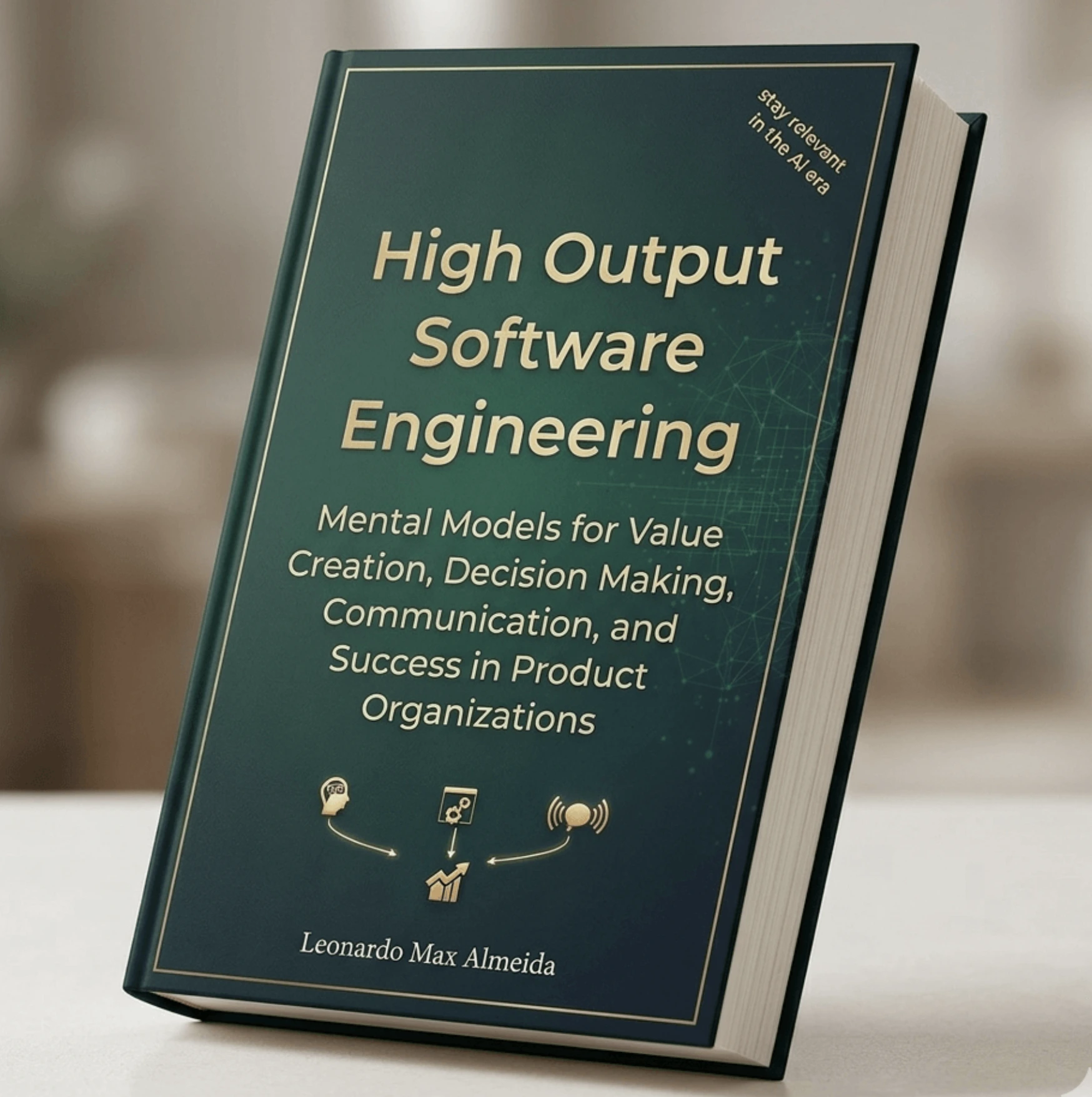
If you're a software engineer working on product teams you might enjoy my book High Output Software Engineering — it's all about understanding value creation, making value-driven trade-offs, communicating with excellence and knowing how to navigate organization dynamics.
Buy it now for $0.99 (PDF & EPUB instant access)