Notes from Matt Pocock's Workflow for AI Coding presented on April 24th, 2026
My notes and thoughts on this talk
- smart zone <> 100k token of context <> dumb zone
- multi phase plan - way of doing things up to December 2026
- multi phase plan that keeps looping until all phases are completed
- Ralph - same as above, but instruct AI to keep looping on the initial PRD with the instruction: do one small thing to get us closer to the end goal. (keep it on the smart zone)
- pro tip: always keep tokens used in session visible
- you still need to understand the code. The code is your battleground. goes against the ideas of specs driven development, where when somethings goes wrong you go back and change the specs and ask the AI agent to fix it, without looking at the code.
- subagents: another LLM agents that goes to a parallel task and return only the result, without polluting the main context window.
- Should you install a bunch of frameworks that helps you with this planning and build process? eg. spec-kit
- no, you should own all of your stack, so you know whats going on and when things aren’t working you know what you need to fix.
- I’m amazed by how the principles keep repeating itself. Javascript frameworks (Nest.js, Next.js) helped you move fast until they stopped working, and then you were moving slower because you didn’t understand all the magic they were doing under the hood.
- two types of tasks: human in the loop tasks (planning) - vs - AFK tasks (implementation)
- Document the destination (PRD) and the journey (the split of tasks)
- after using the /grill-me skill, you don’t need to review/read the PRD, because that’s checking the LLM ability to summarize, which we know it’s really good. We already reviewed everything the LLM will do during the grill-me skill.
- understanding the code deeply will help you get much more value out of the AI
- AI loves coding horizontally instead of focusing on the vertical slices
- You want to code using vertical slices because you can have instant feedback loop on every task (again, just like it has always been)
- TDD helps AI write better tests because it’s going step by step
- if you are having bad results with your AI you need to create better feedback loops for it.
- do not keep documents around as they get old and may cause noise to future AI session. Keep documentation as code.
- influencing AI behavior. two ways:
- push: things you add in AGENTS.md (eg. “talk like a pirate”)
- pull: things you add as SKILLS (eg. “if you need to do this, follow these instructions”)
- How to enforce certain patterns in the codebase.
- let the implementer agents pull that information, but push the information to the reviewer agents
- order
- /grill-me - get alignment with AI, removes ambiguity
- /to-prd - document the destination (don’t need to read this, as alignment was built on the step before and AI is really good at summarizing stuff)
- /to-issues - document the journey (kanban - make sure you agree with the vertical slices it created, meaning, that you have proper feedback loop if each task can be validated as converging to your end goal) - create issues on local markdown files
- execute vertical slices and QA in loop (in parallel if possible)
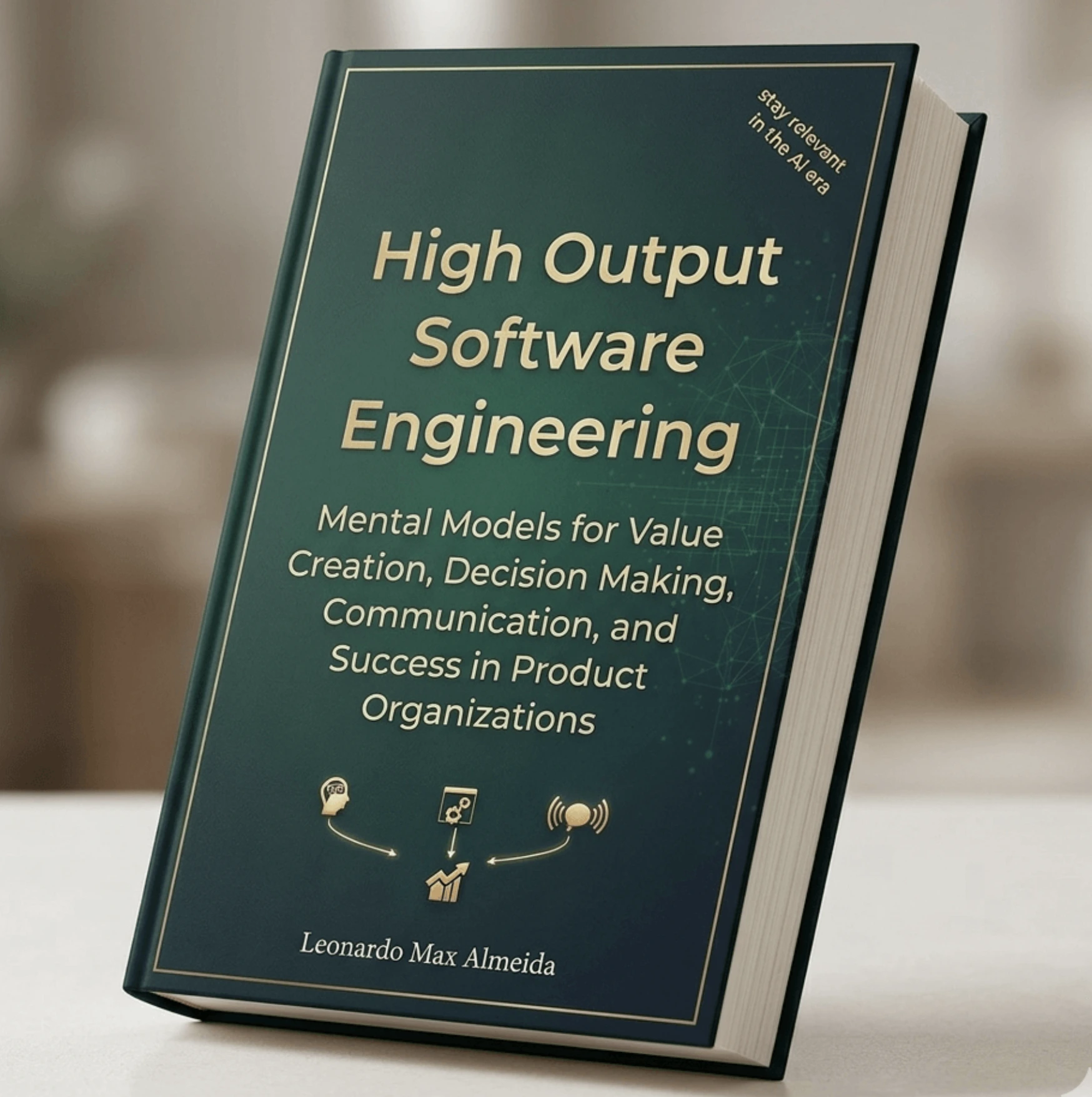
If you're a software engineer working on product teams you might enjoy my book High Output Software Engineering — it's all about understanding value creation, making value-driven trade-offs, communicating with excellence and knowing how to navigate organization dynamics.
Buy it now for $0.99 (PDF & EPUB instant access)